Tabbed Pages App Example
Developers love to look at examples. A very nice feature in Appery.io platform is that you can create a new app based on an existing example/template. We just added a new Tabbed Pages Example and will be adding more soon.

Developers love to look at examples. A very nice feature in Appery.io platform is that you can create a new app based on an existing example/template. We just added a new Tabbed Pages Example and will be adding more soon.
With the proliferation of mobile devices and increased demand for mobile apps in the enterprise, many developers have switched their interests to mobile development. Even those who are not familiar with the craft of mobile development have considered or tried to create a mobile app at some point. But to be perfectly honest, mobile development is challenging. If it was easy, everyone would be building apps and experienced developers wouldn’t enjoy such high demand. In reality, you need to have pretty strong background using technologies such as HTML, JavaScript, and CSS to build even the simplest mobile app. This is not even considering the various frameworks you would need to learn, on top of everything else.
If you are not a traditional developer but want to a build a mobile app, you have to follow a challenging routine of learning endless set of information, libraries, frameworks and other tools. Of course, such an approach gives your more low-level control over your code, but the chance that you will lose interest before you build something is rather high.
Our Youtube channel has over 80 videos, and we are happy to announce we now have videos in German. Our German partner Objective has created videos that you can view here (click on PLAYLIST – top left to see the playlist):
Gone are the days when you could afford to take months to build an enterprise mobile app. In today’s fast market, you need to be able to prototype the app in a few days (or even hours), release the first version in a few weeks, get feedback, fix bugs, release the second version. Repeat.
To help you meet this challenge, Appery.io and Orchestrate have collaborated to create this step-by-step tutorial on just how fast you can build a real mobile app. The app is built in the Appery.io visual development platform, connected to an Orchestrate database via REST APIs, tested, and deployed. (If you’re new to Appery.io you can start with the Building your first mobile app tutorial.)
In addition, Appery.io and Orchestrate will hold a joint webinar titled “Building Enterprise Mobile Apps Fast with the Orchestrate Database and Appery.io Development Platform” covering this material on September 11 at 10:00am Pacific time. Register now!
Appery.io and SOA Software have collaborated on an end-to-end solution to the “mobile first” vs. “API first” question—an integrated experience that covers everything from exposing and managing APIs to building entire cross-platform apps.
This integrated platform streamlines development, decreasing time-to-market and increasing developer adoption.
Join Appery.io’s Max Katz, and SOA Software’s Ryan Bagnulo on Tuesday, August 26th at 10 AM Pacific for a joint webinar to learn more about the new integrated mobile development and API management solution.
On August 10 we’re going to update our Standard plan pricing to make it more attractive for Standard plan customers to select an annual subscription. Although higher, the new pricing will offer a much increased discount when choosing an annual subscription over the monthly option. No other plan will be affected. We are grandfathering all existing standard plan subscriptions, so if you are a current Standard plan customer before August 10, your price will not change, unless you make a change to your subscription. Read the rest of this entry »
The Appery.io team just released a number of really nice features. Learn about what’s new in this post.
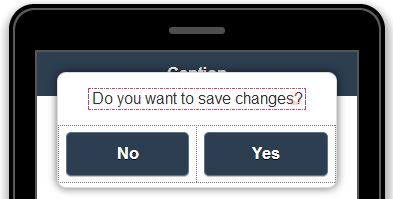
The new jQuery Mobile Popup component gives you more power to build app UI. The component can be used to notify the user to confirm an action, or just display any important information.
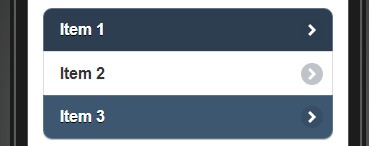
We added a number of properties to the list to simplify UI building. For instance, it is now easy to make the list read-only.
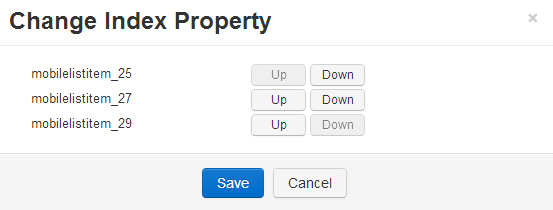
We also added the ability to manage the list items order. You can do this by using the Index property in the Properties panel:
Everyone likes icons, and there is now a better way to select one. If the component supports an icon (List, Button etc.), the Icon property will be available:
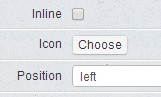
By clicking “Choose,” the icons list will appear:
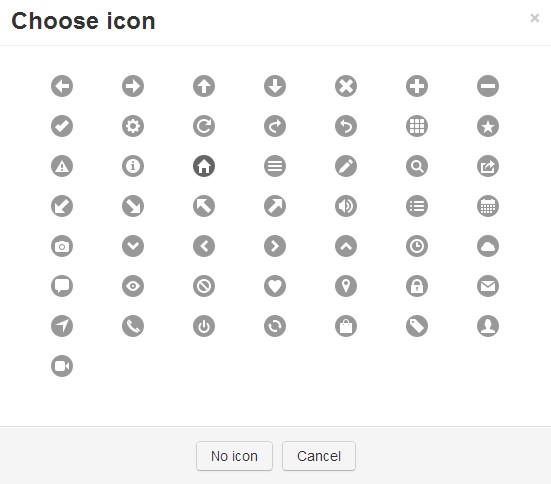
This is much more fun as you can see the actual icon.
The Appery.io cloud database got a number of very useful upgrades.
By adding the ability to manage database indexes, we allow you speed up the frequently used queries. It’s a good thing to use when transferring a lot of data between the devices and Appery.io backend:
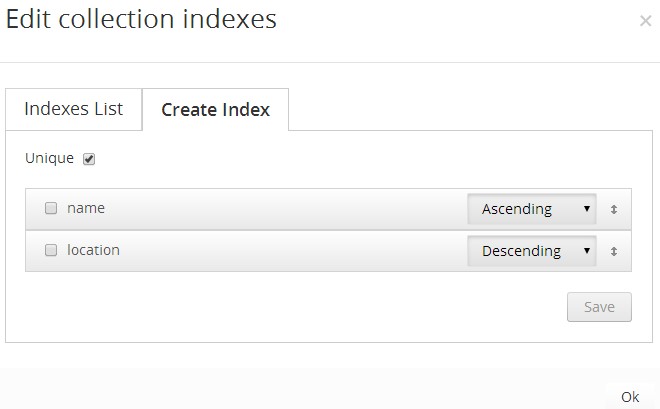
To reduce data transfer and speed up the app, use the MongoDB Projection concept that the Appery.io database now supports. By using Projection, you can selectively retrieve columns from the database without the need to transfer excess data (columns). This will decrease the data being sent to the client (app), and also increase app responsiveness.
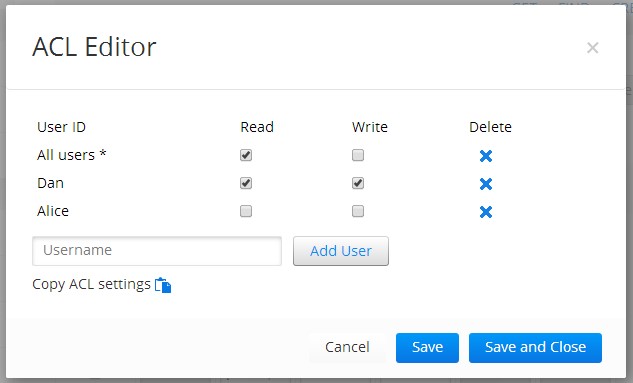
User access control is now more flexible with the new ACL editor. You can specify access rights for each user separately, for all users at once, or just for the user that created a specific collection entry:
The Appery.io database now supports the Media Manager that helps manage files. You can upload and delete any sort of files directly from the database console by using it:
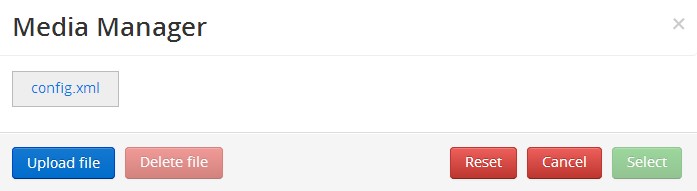
It’s now possible to get a file list based on the Files collection content and provided ACL for every file (you can of course control user access rights for files too).
It’s always a good idea to make a backup of your database. With the new database versioning features, you can create versions (backups) of the database and restore to a particular version instantly:

To make development and testing faster, we combined the Script tab and Test tab into a single page. You can now quickly test the script and see the execution result without the need to switch tabs:
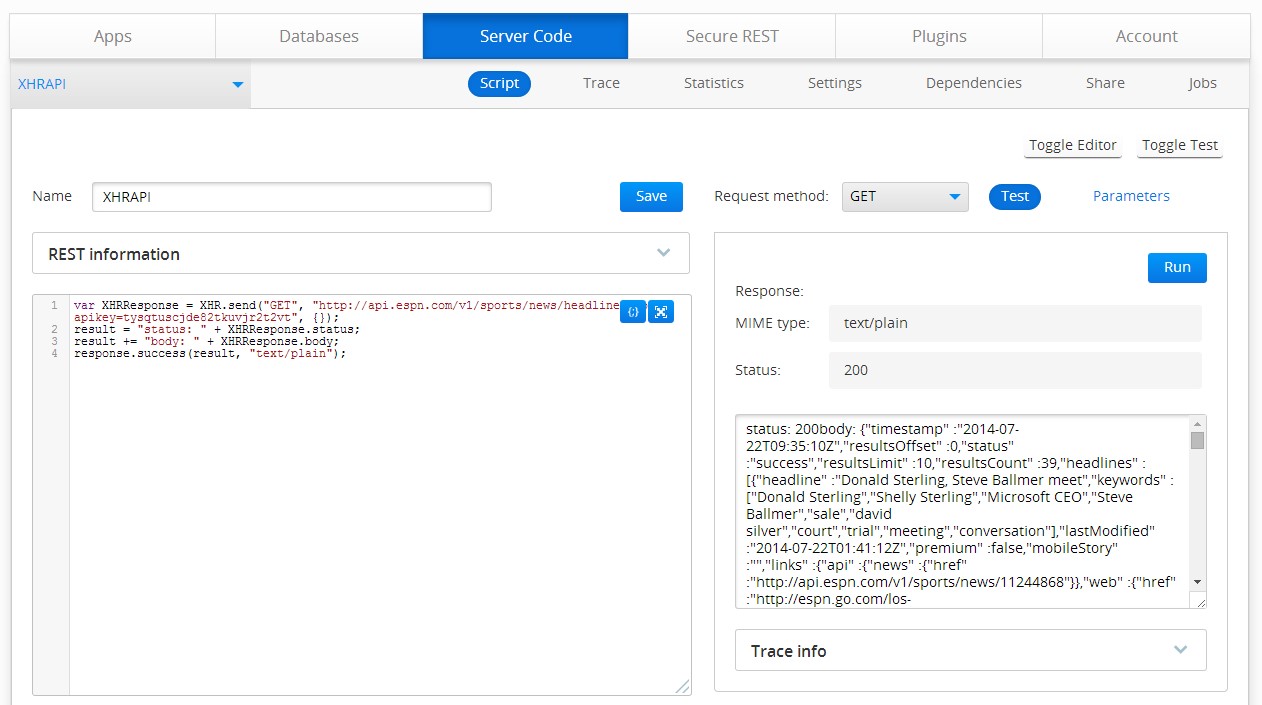
The Server Code API was upgraded with a new service – multiUpdateObject. By using it, you can update multiple objects via a single REST service. See the Server Code API to learn what functionality can be used on the Appery.io server side.
Customer Console is a great way to create a development process where a customer can manage databases and push notifications without the developer attention. The Customer Console adds the following new features:
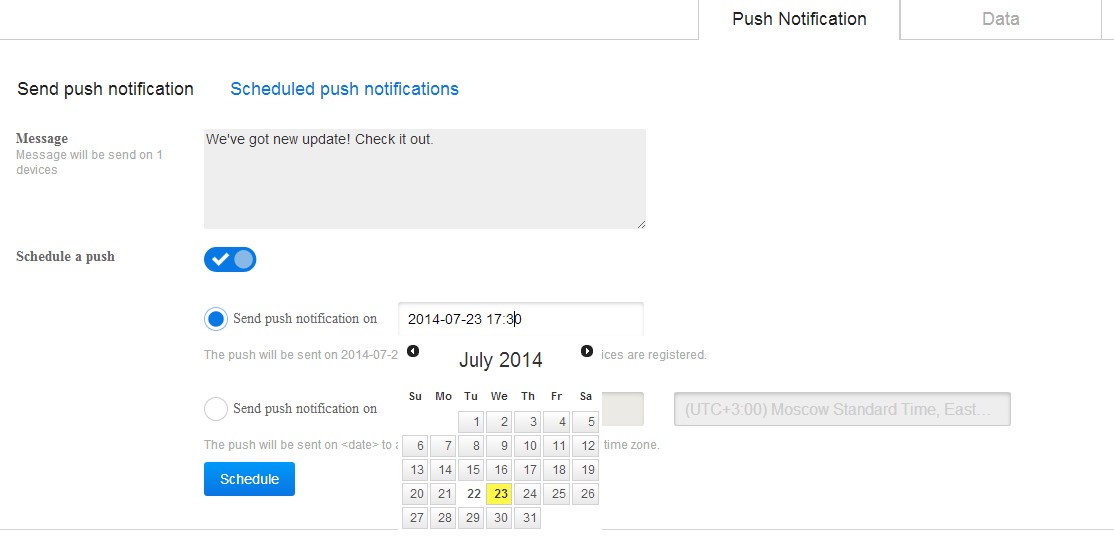
To simplify working with Push, we have moved the Push tab together with the app. So now it’s a lot simpler; with every app, you can enable its own push capability:
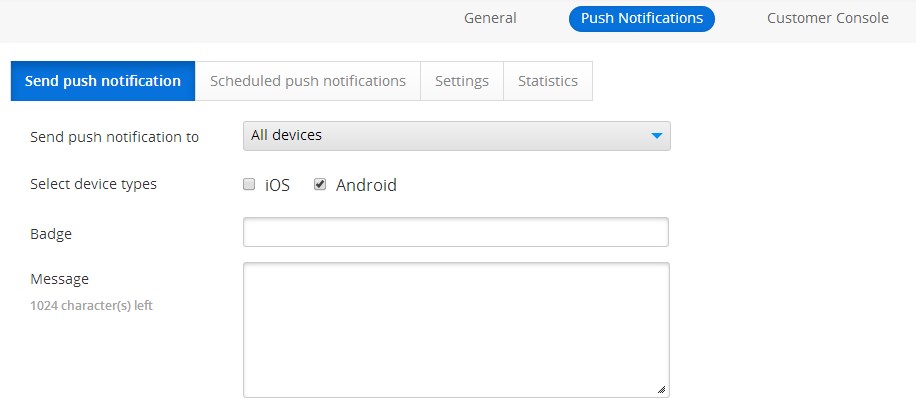
If you new to Appery.io Push Notifications, we recommend starting with this tutorial.
Now, when the app is exported from the Appery.io with “Release” checkbox checked, JavaScript files will be minified. This option works for all binary exports and reduces the final binary size. Head to the Exporting the app section if you want to know more about Appery.io app exporting possibilities.
With every new Appery.io update, our goal is to make app development faster and simpler in the cloud.
Follow us Twitter, and Facebook. And if there is anything we can do better, let us know on the forum.
We pushed a number of really nice features over the weekend. Check out the release notes and what’s new. A full blog post is coming up shortly.
Please note that we will be upgrading Appery.io with new features on Sunday July 20, starting at 12:00 AM PST (midnight on Saturday night). The following services will be temporarily unavailable:
We apologize for the inconvenience. If you have questions, please contact us at support@appery.io via the support forum.
This video shows all the major and minor Appery.io features. The video covers: